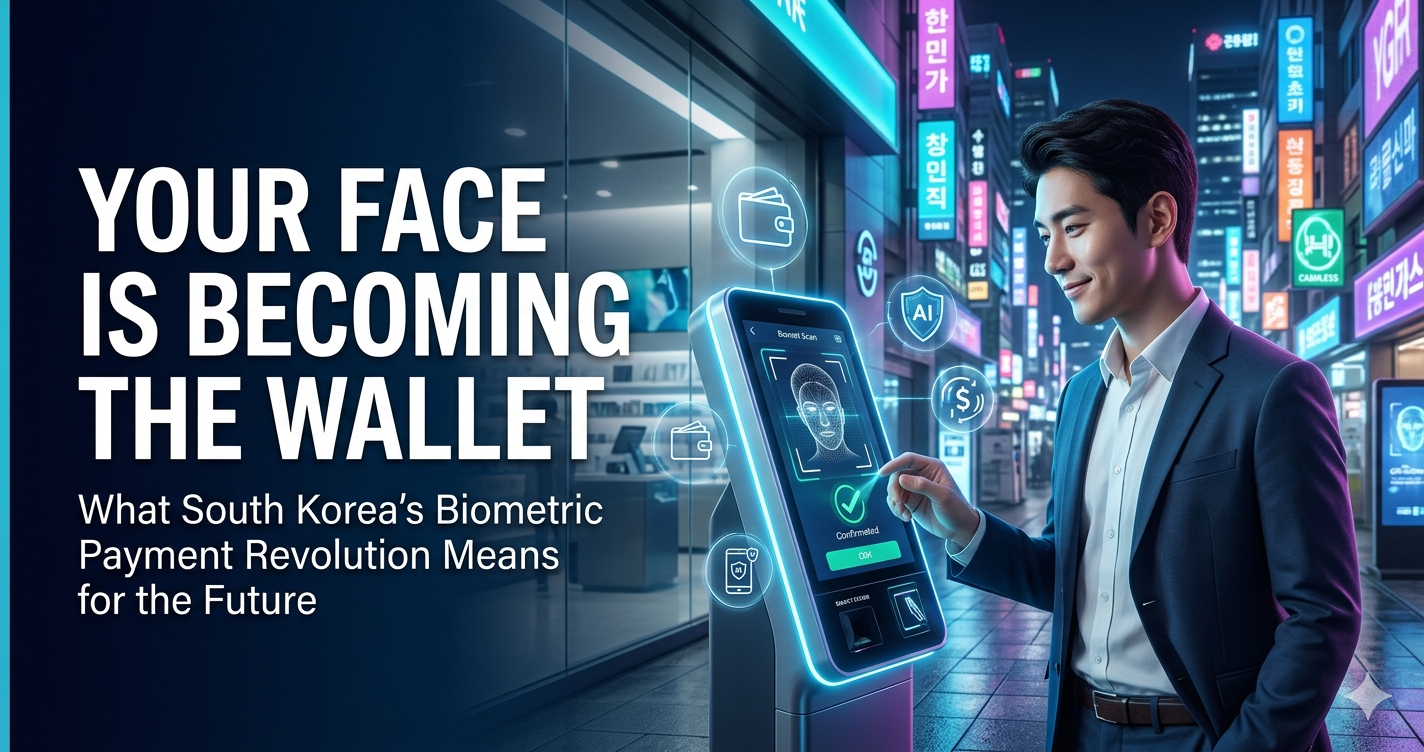
A recent report highlighted how millions of consumers in South Korea are now paying simply by showing their face at retail counters. Facial recognition payments are rapidly expanding across cafés, restaurants, and convenience stores, turning biometric identity into a real-world payment mechanism.
This is not just a fintech trend.
It represents one of the biggest transformations happening in:
- identity,
- payments,
- authentication,
- and AI-powered customer experiences.
At MemoFaceAI, we believe this shift also highlights something even more important:
The future of biometric systems will depend not only on recognition, but on trust, liveliness, and intelligent verification.
In Korea, the Face Is Becoming the Wallet
According to recent reports, South Korean fintech platform Toss launched nationwide face-scan payments and quickly reached millions of users across hundreds of thousands of retail outlets.
Consumers can:
- walk to a counter,
- look into a camera,
- and complete payment instantly
without: - cards,
- phones,
- or QR codes.
This level of adoption demonstrates how quickly biometric experiences can become mainstream when:
- convenience is high,
- trust is established,
- and friction is removed.
Why Facial Payments Are Growing So Fast
Several factors are accelerating biometric payment adoption globally:
Contactless Convenience
Consumers increasingly prefer frictionless experiences.
Faster Checkout
No phone unlocking, card tapping, or OTP entry.
Integrated Digital Ecosystems
Super-app ecosystems already have strong user trust.
AI-Based Authentication
Modern systems can authenticate users in seconds.
Behavioral Shift Toward Invisible Payments
The payment experience itself is becoming less visible.
This reflects a larger trend:
Payments are evolving from transactions into identity-driven experiences.
But There Is a Serious Security Question
As facial recognition becomes tied to:
- payments,
- access control,
- attendance,
- and digital identity,
one critical issue becomes unavoidable:
How do you ensure the face is real?
This is where many biometric systems become vulnerable.
Attackers today can attempt:
- photo spoofing,
- replay attacks,
- deepfake injections,
- synthetic identity fraud,
- and AI-generated impersonation.
A face alone is no longer enough.
Why MemoFaceAI Strongly Emphasizes Liveliness Detection
At MemoFaceAI, we believe:
“Recognition without liveliness validation creates security risk.”
That is why our systems are designed with strong focus on:
- face liveliness,
- anti-spoofing AI,
- behavioral validation,
- and intelligent authentication workflows.
Modern biometric systems must verify:
- not just identity,
- but human presence.
This means detecting whether:
- the face is live,
- natural,
- physically present,
- and behaving authentically in real time.
The Future of Payments Will Depend on Trust
The South Korean adoption story is impressive, but it also highlights an important challenge discussed globally:
Privacy and trust.
Experts note that users are far more sensitive when:
- biometric data is centrally stored,
- identity becomes tied to payments,
- and AI systems continuously process facial data.
Unlike passwords:
- faces cannot simply be reset after compromise.
This makes:
- secure biometric storage,
- encryption,
- governance,
- and responsible AI deployment
absolutely critical.
The Same Technology Is Transforming Enterprises
While face-pay systems attract attention in retail, the same AI technologies are rapidly expanding into:
- workforce attendance,
- visitor management,
- smart access control,
- industrial security,
- campus monitoring,
- and operational analytics.
Organizations increasingly want:
- frictionless identity,
- touchless operations,
- and real-time authentication.
But enterprises also face:
- attendance fraud,
- proxy access,
- unauthorized entry,
- and identity spoofing.
This is why liveliness validation becomes essential far beyond payments alone.
Existing CCTV Infrastructure Is Becoming Intelligent
One of the biggest industry shifts is that existing CCTV systems can now become:
- identity systems,
- operational intelligence platforms,
- and AI-powered authentication infrastructure.
At MemoFaceAI, we help organizations transform existing camera systems into intelligent AI environments capable of:
- face attendance,
- visitor verification,
- workforce analytics,
- unauthorized access alerts,
- and liveliness-based authentication.
This allows businesses to modernize operations without replacing their entire infrastructure.
Convenience Alone Is Not Enough
The global biometric industry is now entering a new phase.
The question is no longer:
“Can AI recognize a face?”
The real question is:
“Can AI intelligently verify trust?”
As biometric systems move into:
- banking,
- retail,
- transportation,
- healthcare,
- and enterprise operations,
security expectations will rise dramatically.
The future belongs to systems that combine:
- convenience,
- speed,
- intelligence,
- privacy,
- and anti-spoofing security.
The Rise of Invisible Authentication
The long-term future of identity systems will likely become:
- seamless,
- passive,
- and invisible.
Users may eventually:
- walk into offices,
- enter buildings,
- complete transactions,
- and access services
without consciously “authenticating” at all.
AI systems will continuously understand:
- who the person is,
- whether they are real,
- and whether activity appears trustworthy.
This is where biometric identity is heading.
Final Thoughts
South Korea’s rapid adoption of facial payments demonstrates how quickly biometric experiences can become part of everyday life.
But as identity increasingly becomes the payment method itself, organizations must think beyond convenience alone.
Biometric systems must also provide:
- liveliness verification,
- anti-spoofing protection,
- privacy safeguards,
- and trustworthy AI authentication.
At MemoFaceAI, we believe the future of biometric systems will not be defined only by recognition accuracy.
It will be defined by intelligent trust.