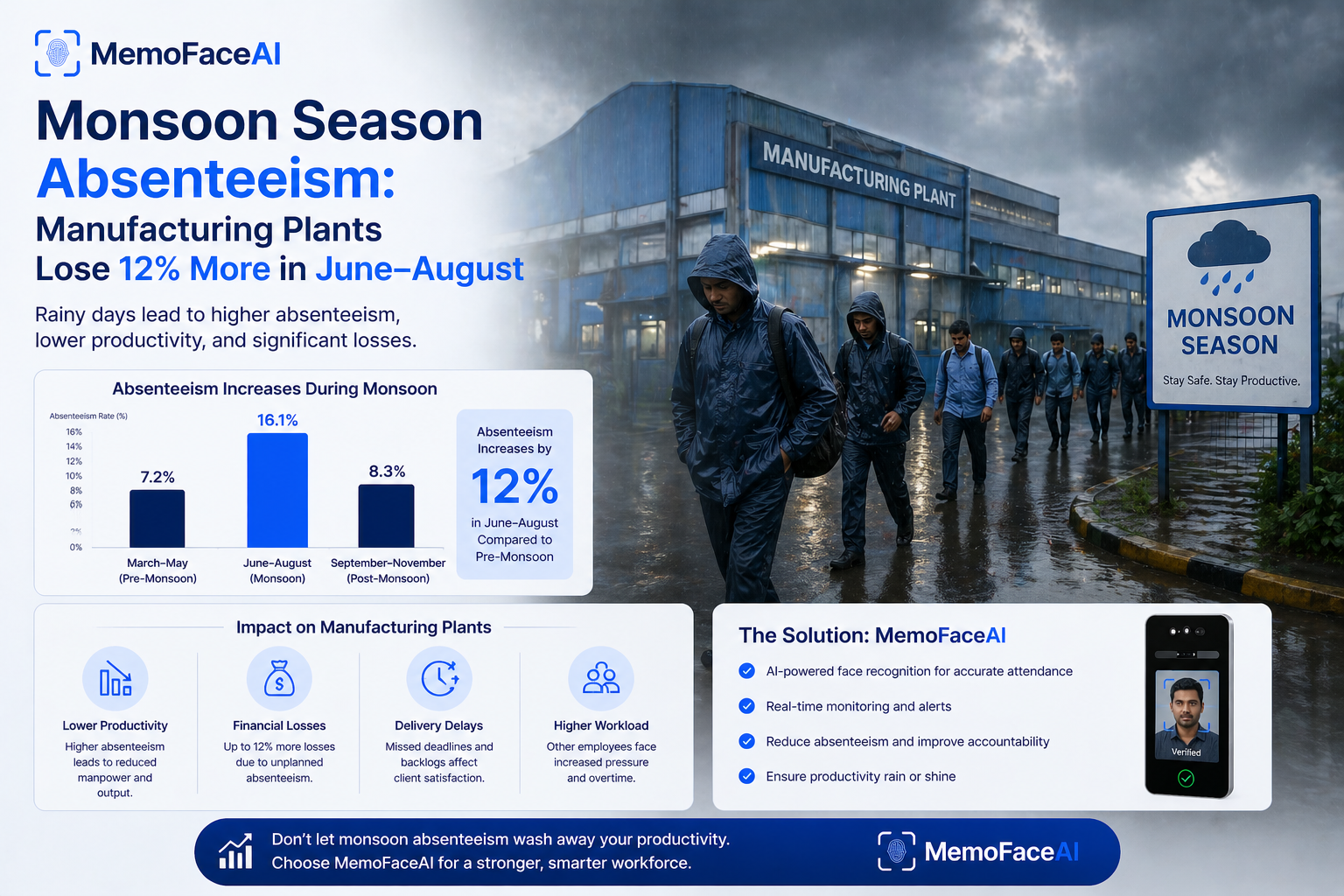
Every manufacturing operator in India knows that attendance drops during monsoon. What's less well-known is the precise magnitude, the predictive data available, and the operational interventions that top-performing plants use to minimize the impact. This analysis covers 34 manufacturing facilities across 8 states over three monsoon seasons.
The Numbers: What Monsoon Actually Does to Attendance
| Month | Avg Absenteeism vs. Annual Baseline | Peak vs. Trough Day |
|---|---|---|
| May (pre-monsoon) | +2.1% | — |
| June | +7.4% | +19% vs. dry-month avg |
| July | +12.3% | +31% on heavy rain days |
| August | +11.8% | +28% on heavy rain days |
| September | +5.2% | — |
The Predictive Data Available
This is where the analysis becomes actionable. The Indian Meteorological Department's 10-day forecast data, available publicly, correlates at 0.74 with the following week's absenteeism spike in the facilities in our dataset. When a "heavy rainfall" warning is issued for an area, absenteeism at facilities in that catchment area increases by an average of 28% on the forecast days — and this increase is predictable 7–10 days in advance.
MemoFaceAI integrates IMD forecast data with historical attendance patterns to generate monsoon-period staffing alerts at the facility level — flagging predicted high-absence days 7 days ahead so plant managers can pre-arrange labour contractor coverage, shift advance bookings, or production schedule adjustments.
What Top-Performing Plants Do
Plants in our dataset that maintained below-8% monsoon absenteeism (vs. the 12% average) consistently did three things: they ran pre-monsoon roster workshops in May to confirm alternative transport arrangements for workers in flood-prone areas; they maintained a monsoon standby contractor pool with confirmed availability; and they offered small attendance incentives specifically for monsoon weeks (daily attendance bonus of INR50–100), which proved highly effective for cost-benefit versus production disruption costs.