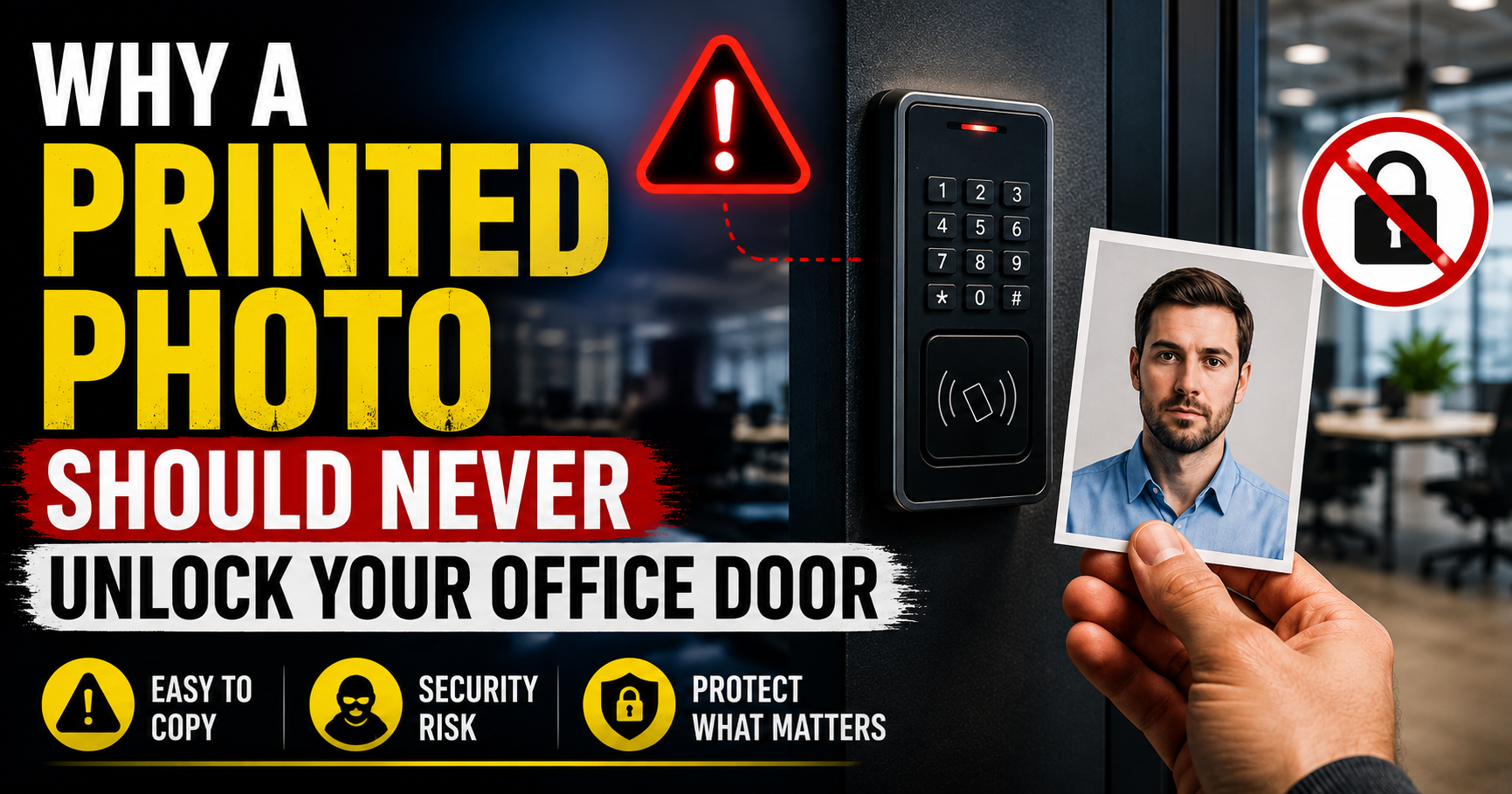
systems can be fooled using nothing more than a high-quality photograph. Researchers and cybersecurity experts have warned that systems without effective anti-spoofing measures or liveness detection remain vulnerable to photo spoofing, deepfakes and other presentation attacks.
As organizations increasingly adopt facial recognition for attendance, access control and visitor management, one question becomes more important than ever:
Can a printed photograph be used to impersonate an employee?
Unfortunately, in some implementations, the answer is yes.
The Problem Isn't Facial Recognition
Facial recognition itself is not the problem.
The real issue is how the technology is implemented.
Many low-cost systems simply compare a live camera image with a stored photograph. If the similarity score is high enough, access is granted.
If the system only performs 2D image matching without robust anti-spoofing or liveness verification, an attacker may attempt to use:
- Printed photographs
- Images displayed on mobile phones or tablets
- High-resolution social media photos
- Deepfake videos
- Video replay attacks
- 3D masks in sophisticated attacks
Modern AI has made generating realistic fake identities easier, making layered security increasingly important.
Why This Matters for Businesses
Imagine a factory where facial recognition controls access to:
- Production floors
- Research labs
- Warehouses
- Server rooms
- HR departments
- Data centers
If unauthorized access can be obtained using a simple photograph, the consequences could include:
- Theft
- Data leakage
- Attendance fraud
- Unauthorized production access
- Insider security incidents
For organizations, convenience should never come at the cost of security.
MemoFaceAI's Security Philosophy
At MemoFaceAI, we have taken a different approach.
Our philosophy is simple:
A static photograph should never be treated as proof that a real person is physically present.
For security-sensitive use cases, MemoFaceAI is designed not to rely on photo-based authentication alone for granting access.
Instead, the platform emphasizes live verification techniques and anti-spoofing controls appropriate to the deployment, helping distinguish a real person's presence from a printed image or screen replay.
This approach is intended to significantly reduce the risk posed by common presentation attacks such as printed photos and replayed images.
Security Is More Than Face Matching
A secure biometric system should consider multiple signals, not just facial similarity.
Examples include:
- Liveness verification
- Anti-spoofing detection
- Environmental validation
- Device integrity
- Camera authenticity
- Event logging
- Continuous monitoring
- Audit trails
Layering these controls creates a much stronger defense than relying on face matching alone.
Beyond Attendance
At MemoFaceAI, facial recognition is only one component of a broader workforce intelligence platform.
Organizations use MemoFaceAI for:
- Workforce Visibility
- Attendance Automation
- Payroll Integration
- Gate Management
- Visitor Management
- CCTV Analytics
- Employee Movement Intelligence
- Compliance Reporting
Because these systems influence operational and security decisions, protecting against spoofing attempts is a core design consideration.
Choosing the Right Facial Recognition Solution
Before implementing any biometric system, organizations should ask vendors important questions:
- Does the system include anti-spoofing protection?
- Can it distinguish a live person from a photograph?
- How does it address replay attacks?
- What safeguards exist against AI-generated deepfakes?
- Are authentication events logged and auditable?
- How are biometric templates protected?
These questions are becoming increasingly important as attack techniques continue to evolve.
Final Thoughts
Facial recognition has transformed workplace security and operational efficiency, but like any security technology, its effectiveness depends on how it is implemented.
Organizations should evaluate solutions based not only on speed and convenience, but also on resilience against modern spoofing techniques.
At MemoFaceAI, our focus is on building enterprise-grade biometric solutions that prioritize live presence verification, layered security, and operational reliability over simple photo matching.
Because when it comes to securing people, facilities, and business operations...
A photograph should never be enough.