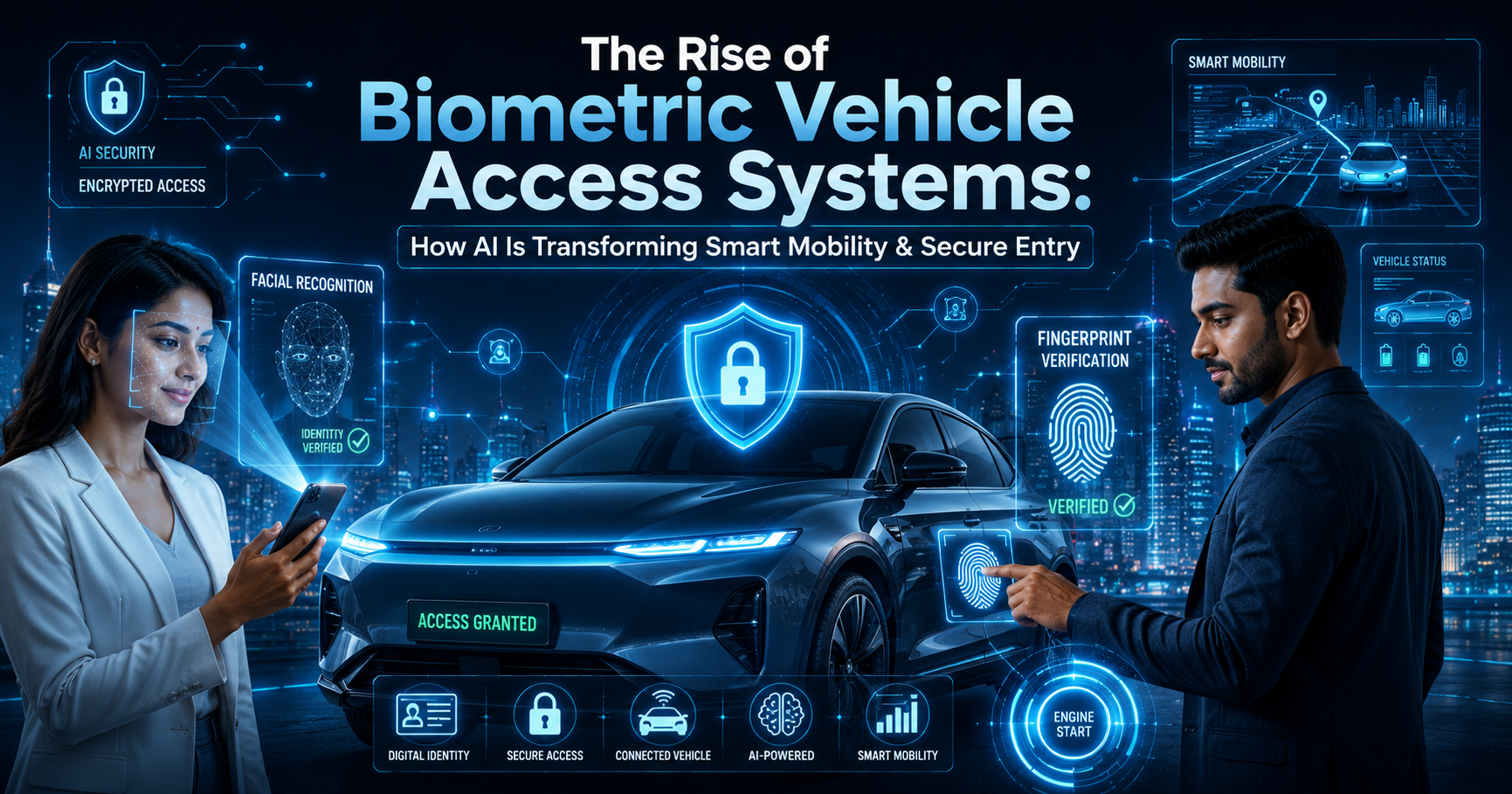
Traditional access methods such as:
physical keys,
swipe cards,
passwords,
and manual verification systems
are increasingly being replaced by biometric and AI-powered identity technologies.
Recent market analysis reports indicate that the biometric vehicle access market is experiencing rapid growth as organizations and infrastructure operators move toward smarter, faster, and more secure access systems. This reflects a broader transformation happening across mobility, smart infrastructure, and AI-driven identity management.
The future of vehicle access is becoming:
intelligent,
automated,
and deeply integrated with AI systems.
Why Traditional Vehicle Access Systems Are Becoming Outdated
Conventional vehicle access systems face several operational and security limitations:
Lost or stolen access cards
Password sharing
Unauthorized vehicle usage
Manual gate verification delays
Traffic congestion at entry points
Identity fraud risks
Hardware maintenance issues
In high-traffic environments such as:
corporate campuses,
residential societies,
industrial facilities,
logistics hubs,
airports,
and smart cities,
these inefficiencies create operational bottlenecks and security concerns.
Organizations are now looking for faster and more intelligent identity-based access systems.
The Rise of Biometric Vehicle Access
Biometric vehicle access systems use technologies such as:
behavioral intelligence,
to enable seamless and secure access control.
Instead of relying on:
cards,
tags,
or passwords,
AI systems can automatically identify authorized individuals and grant access in real time.
This creates:
frictionless entry,
stronger security,
and better operational efficiency.
AI Is Turning Access Control Into Intelligent Infrastructure
Modern access systems are no longer standalone gate management tools.
They are becoming part of integrated AI-powered infrastructure ecosystems that combine:
and real-time monitoring.
This allows organizations to:
automate gate operations,
monitor vehicle movement,
improve security visibility,
and generate operational analytics.
The access control system itself becomes intelligent.
Facial Recognition Is Driving Contactless Mobility
One of the biggest drivers behind biometric access adoption is the demand for contactless experiences.
Users increasingly expect:
faster movement,
minimal waiting,
and seamless access experiences.
Facial recognition systems allow:
employees,
residents,
visitors,
and authorized drivers
to access facilities without:
touching devices,
showing IDs,
or manually interacting with security systems.
This improves:
user convenience,
traffic flow,
and security automation simultaneously.
MemoFaceAI: AI Identity Intelligence for Smart Access & Workforce Monitoring
At MemoFaceAI, we believe organizations should not need expensive infrastructure replacement to adopt AI-powered access systems.
MemoFaceAI transforms existing CCTV infrastructure into intelligent AI-powered identity and operational monitoring platforms capable of:
By leveraging existing camera systems, organizations can modernize access control and workforce intelligence without major hardware investments.
Smart Campuses & Smart Cities Are Accelerating Adoption
Biometric access systems are rapidly expanding in:
smart residential societies,
industrial parks,
corporate campuses,
airports,
universities,
logistics facilities,
manufacturing plants,
and smart city infrastructure projects.
Governments and enterprises are increasingly investing in:
intelligent mobility,
AI surveillance,
digital identity systems,
and smart infrastructure automation.
Vehicle access systems are becoming part of a much larger AI-driven operational ecosystem.
Existing CCTV Cameras Are Becoming Identity Sensors
One of the biggest technological shifts is that CCTV cameras are no longer just recording devices.
Modern AI systems can now use cameras to:
identify faces,
track movement,
analyze vehicle access patterns,
detect anomalies,
and automate identity verification.
This transforms traditional surveillance infrastructure into operational intelligence infrastructure.
Organizations can now use existing camera systems to support:
and security analytics simultaneously.
Security + Convenience = The Future of Access Control
Historically, improving security often increased operational friction.
AI-powered biometric systems are changing that completely.
Modern biometric access systems improve both:
convenience,
and security.
Organizations can:
reduce unauthorized access,
automate identity verification,
improve traffic flow,
and enhance user experiences simultaneously.
This is one of the key reasons biometric access markets are growing rapidly worldwide.
Privacy & Responsible AI Deployment
As biometric systems become more common, organizations must prioritize:
data privacy,
ethical AI usage,
secure biometric storage,
access governance,
encryption,
and audit logging.
Responsible deployment will become one of the most important factors influencing public trust and regulatory compliance.
MemoFaceAI supports privacy-focused deployment models including secure on-premise infrastructure where organizations retain control over their identity and surveillance data.
The Future of Intelligent Access Systems
The future of mobility and access control will increasingly rely on:
behavioral analytics,
and automated operational decision-making.
Access systems will become:
invisible,
intelligent,
and seamlessly integrated into everyday movement.
Instead of manually proving identity repeatedly, users will move naturally through intelligent environments where AI systems continuously validate access permissions automatically.
Final Thoughts
The rapid growth of biometric vehicle access systems reflects a much larger transformation happening across smart infrastructure, mobility, and enterprise security.
Organizations are increasingly looking for systems that:
automate operations,
reduce friction,
improve security,
and create intelligent access experiences.
Platforms like MemoFaceAI are helping enterprises accelerate this transition by transforming existing CCTV infrastructure into intelligent AI-powered identity, attendance, and operational monitoring systems.
The future of access control is no longer based on keys or cards.
It is based on intelligent identity.